CASE STUDY
Payment Processing
OVERVIEW
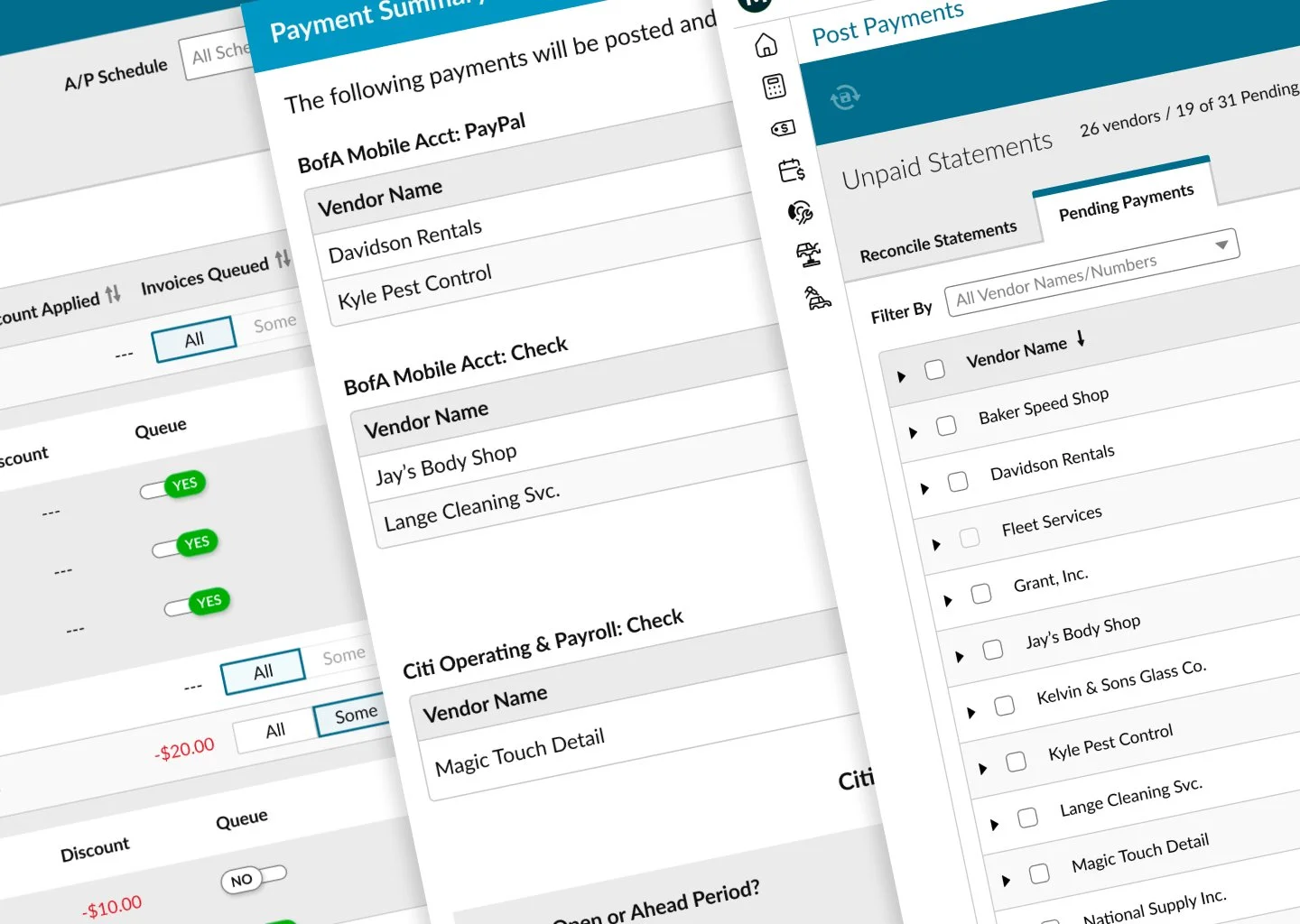
A car dealership's Accounts Payable (AP) workflow differs from standard corporate AP because it manages high-value transactions across multiple specialized departments—from inventory/flooring financing to parts inventory, sublet repairs, and vendor services. The software already had a payment interface, but it needed redesign/refinement to improve usability for dealership customers.
GOALS
Process vendor payments in a timely, efficient manner
Additional payment options for electronic payments (EFT, credit cards) to leverage early payment discounts
Real-time visibility into cash flow, aging reports, and spending patterns
Automate invoice capture and routing for approvals to expedite payment cycles and reduce manual errors.
ROLE
UX Researcher, Designer
TOOLS
ChatGPT, FigJam, Figma, Visual Studio
Team Alignment
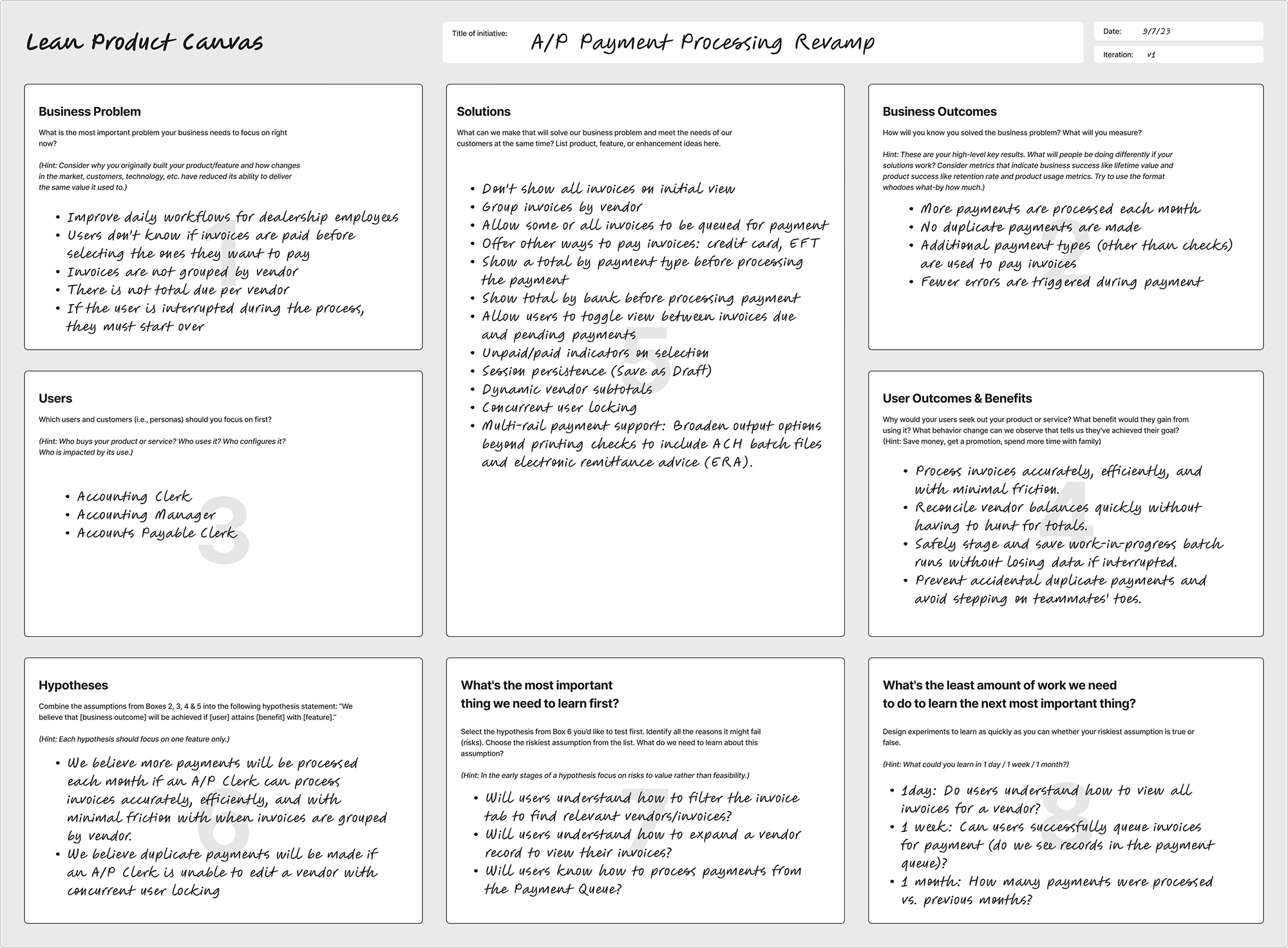
Before we began our first sprint, I led a workshop to align the cross-functional team on our shared goals for this project. As a designer, I always advocate for users and consider interface patterns. Stakeholders focus on the business viability. Using the Lean Product Canvas helped us come to a shared understanding about our goals for the project. By testing assumptions and placing user problems alongside KPIs, we could make descisions that support top-level busines goals.
User Personas
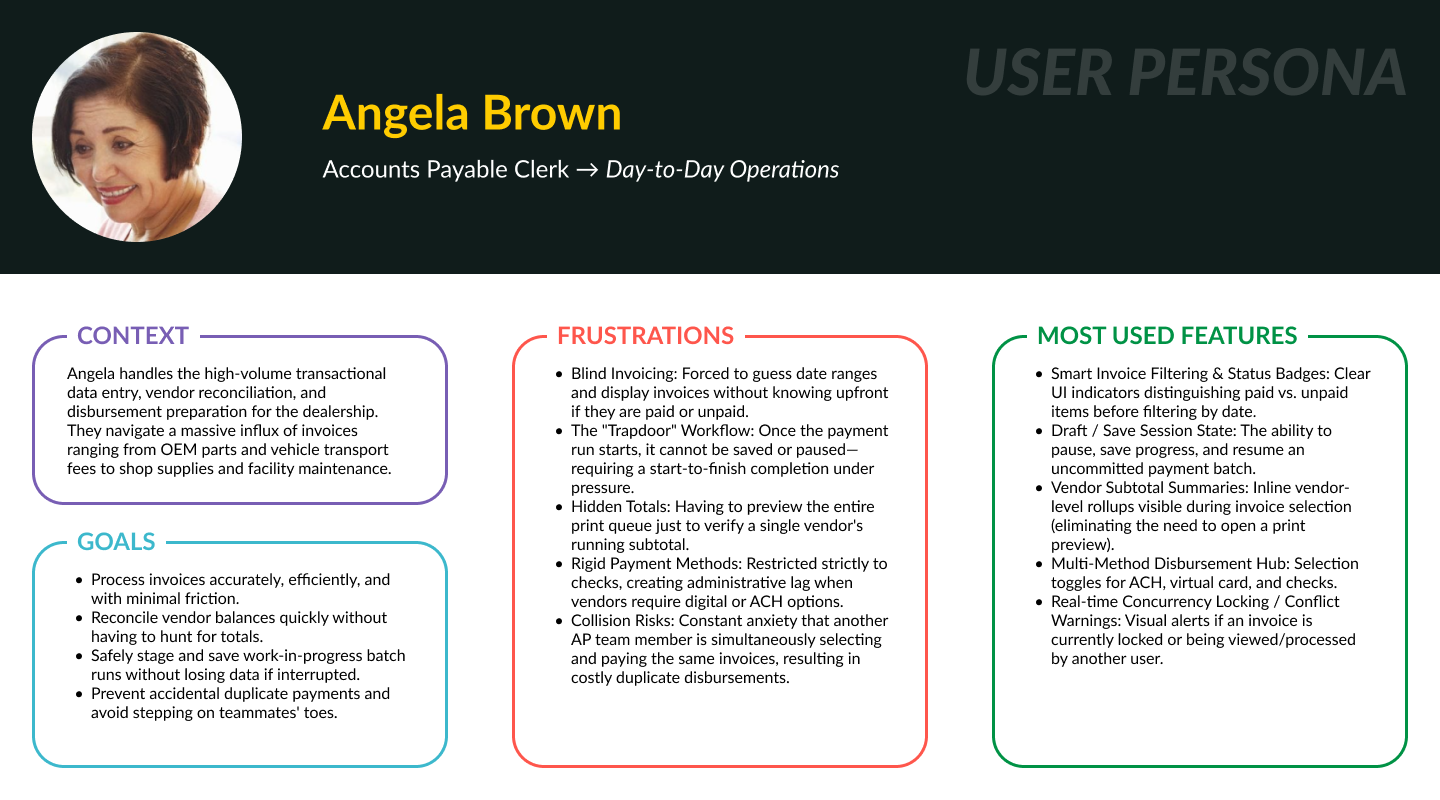
We identified two personas who will use the payment processing interface: the Accounting Manager and the Accounts Payable Clerk. As a company, we have defined personas. However, we needed more detail on these personas to determine how they interact with this existing software and how we can improve it. Because we didn’t always have direct access to users, I employed ChatGPT to help characterize the personas specifically for this project.
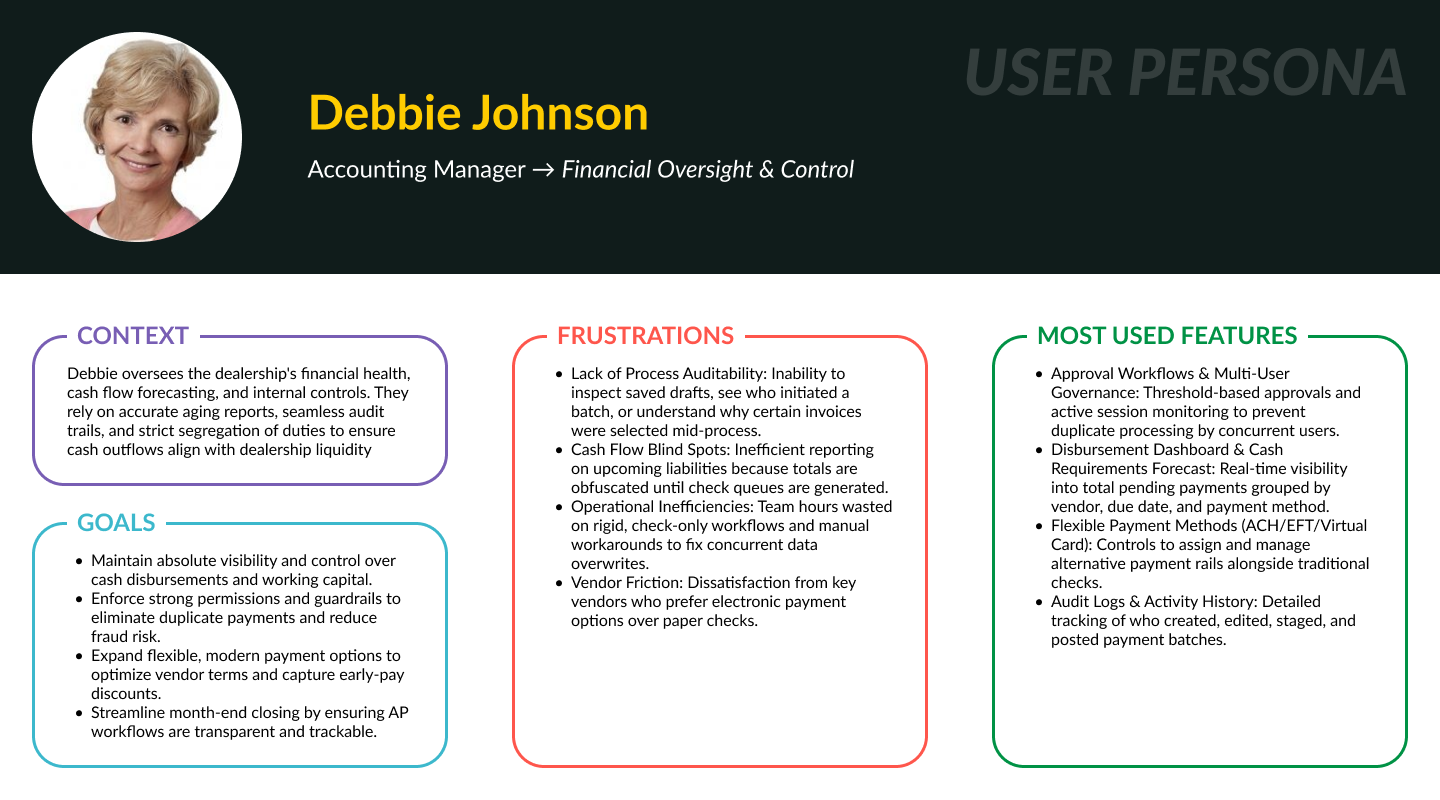
Prompt: I want to improve the user experience for the accounts payable module in a car dealership management system. Create personas for an Accounts Payable clerk and an Accounting Manager at a car dealership. What are their needs, frustrations, goals, and the features they will use most for payment processing?
(I also listed the current process and its pain points that we identified on the Lean Product Canvas.)
Journey Maps
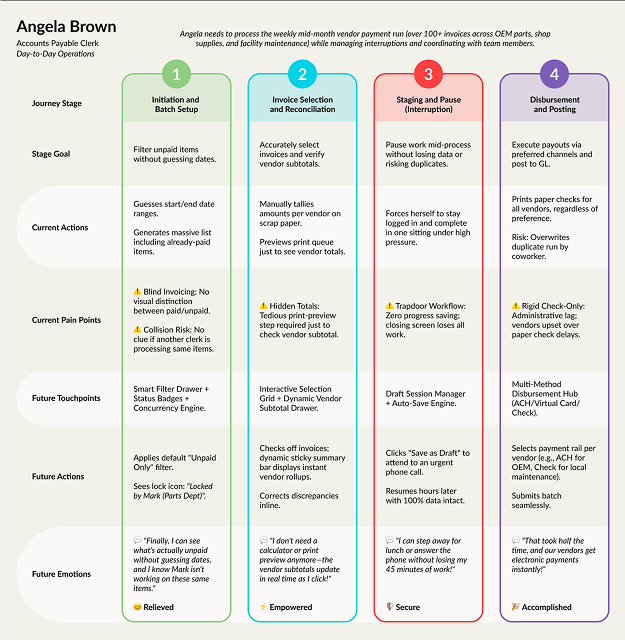
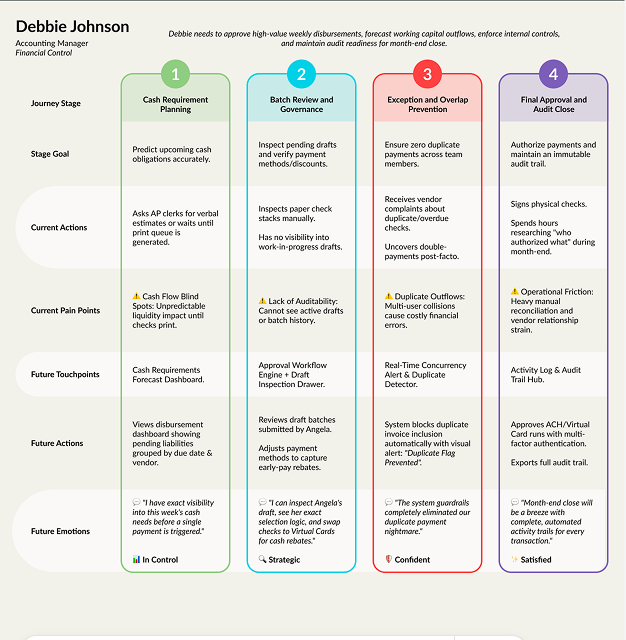
This was another stage where AI really sped up my workflow. I used ChatGPT to create journey maps for each of our personas, based on insights from the Lean Product Canvas and detailed personas that show each persona’s goals, frustrations, and the features they’ll find most useful. The AI output was more visually rudimentary, so I quickly built a better representation in Figma using a template I created for earlier projects.
MVP Features
Reveal Before Filtering
Default to actionable unpaid invoices; make queued status visible at entry.
FINDABILITY
Design for Interruption
Auto-save to preserve selections
CONTINUITY
Make Activity Social
Show who is present and what records are locked
COORDINATION
Bulk Queue
Select vendors and queue all their unpaid invoices
EFFICIENCY
Additional Payment Options
Cash
Credit Card
EFT
FLEXIBILITY
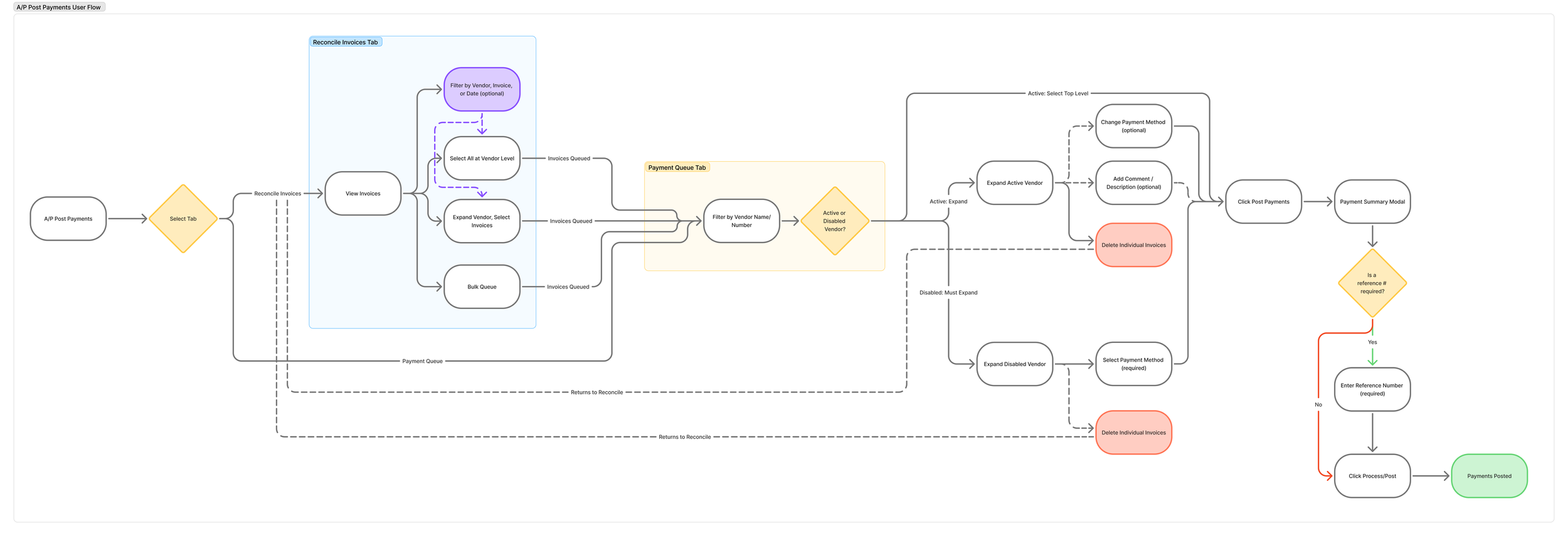
User Flow
I used Figma’s AI to create a user flow once we had gained insights from earlier research. Using AI at this step quickly gave us a sense of what the process could look like. We reviewed it as a team and made a few adjustments, knowing what our technical constraints were.